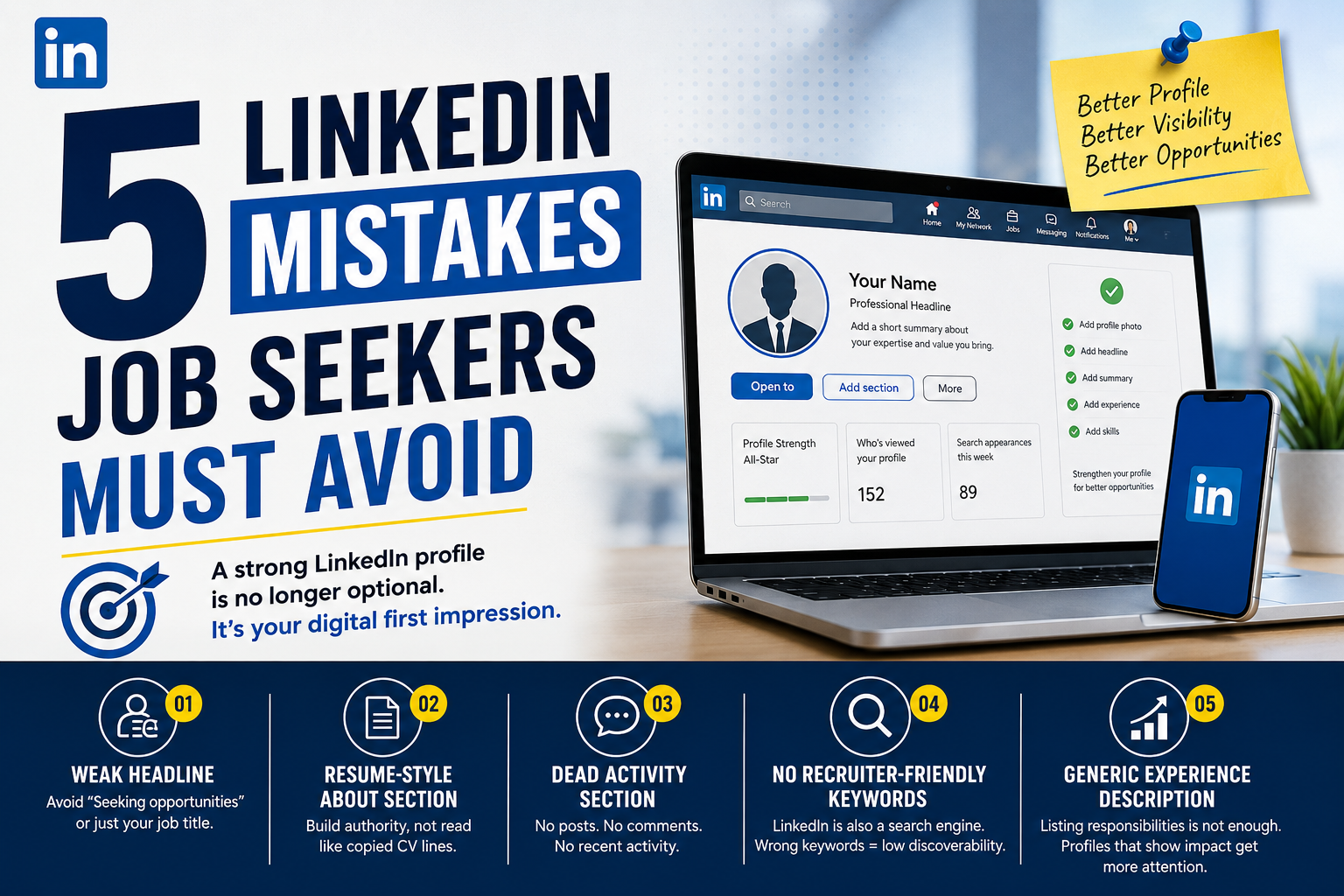
Did you done same LinkedIn Mistakes to Get More Interviews?
In today’s competitive job market, having skills alone is no longer enough.
You may be talented, hardworking, and experienced — but if your LinkedIn profile is weak, recruiters may never even notice you.
Many professionals still treat LinkedIn like a digital resume.
That approach is costing them opportunities every single day.
After reviewing hundreds of LinkedIn profiles, one thing becomes clear:
Many job seekers are invisible not because they lack talent, but because their LinkedIn profile silently tells recruiters to skip them.
Your LinkedIn profile is now your digital first impression.
Before recruiters call you, they search you.
Before hiring managers trust you, they check your online presence.
If your profile does not communicate value quickly, you lose attention within seconds.
In this article, we will break down the 5 biggest LinkedIn mistakes job seekers must avoid and how you can fix them to improve visibility, attract recruiters, and grow professionally.
Table of Contents
ToggleWhy LinkedIn Matters More Than Ever
LinkedIn is no longer optional for career growth.
Today, recruiters actively use LinkedIn to:
- Search candidates using keywords
- Verify experience and credibility
- Evaluate communication skills
- Check industry activity
- Identify professionals with strong personal brands
A weak profile can reduce opportunities even if your skills are strong.
A strong profile can create opportunities even before you apply.
That is the power of visibility.
1. Weak LinkedIn Headline
The headline is one of the most important sections of your LinkedIn profile.
Unfortunately, many professionals waste it with lines like:
- “Seeking Opportunities”
- “Open to Work”
- “Software Engineer”
- “Looking for a Job”
These headlines do not explain your value.
Why This Hurts Your Profile
Your headline impacts:
- LinkedIn search visibility
- First impressions
- Recruiter clicks
- Profile engagement
LinkedIn’s algorithm also uses your headline for search ranking.
If your headline lacks relevant keywords, recruiters may never find you.
Bad Headline Example
Software Developer | Open to Work
Better Headline Example
Full Stack .NET Developer | ASP.NET Core | Angular | Building Scalable Enterprise Applications
Notice the difference?
The second version:
- Includes recruiter-friendly keywords
- Shows expertise
- Sounds professional
- Creates clarity
How to Create a Strong LinkedIn Headline
Your headline should include:
- Your role
- Core skills
- Industry keywords
- Value proposition
Formula
Role + Skills + Value
Example:
Backend Developer | .NET Core & Azure | Helping Build High-Performance Applications
2. Resume-Style About Section
Many people copy-paste their resume summary into LinkedIn.
That is a major mistake.
Your LinkedIn About section should sound human, not robotic.
Recruiters want to understand:
- Who you are
- What you specialize in
- What problems you solve
- What motivates you
Common Mistakes in About Sections
- Too formal
- Generic wording
- No personality
- No achievements
- No storytelling
Weak About Section Example
Experienced software developer with strong technical skills and ability to work in teams.
This says nothing unique.
Better About Section Example
I am a Full Stack .NET Developer passionate about building scalable web applications and solving real business problems through technology.
Over the years, I have worked with ASP.NET Core, Angular, Azure, and SQL Server to deliver enterprise solutions that improve performance and user experience.
Currently focused on growing in system design, cloud architecture, and technical leadership.
This version builds authority and sounds authentic.
Tips for a Strong About Section
- Write conversationally
- Show personality
- Mention achievements
- Include relevant keywords naturally
- End with a future goal or mission
3. Dead Activity Section
One of the fastest ways to look inactive on LinkedIn is having zero activity.
No posts.
No comments.
No engagement.
This creates the impression that you are disconnected from your industry.
Why LinkedIn Activity Matters
Recruiters notice activity because it shows:
- Communication skills
- Professional interest
- Industry awareness
- Consistency
- Personal branding effort
You do not need to become an influencer.
Even small activity matters.
Simple Ways to Stay Active
You can:
- Comment on industry posts
- Share learning experiences
- Post career insights
- Discuss projects
- Celebrate milestones
Consistency matters more than perfection.
Beginner Posting Ideas
- What you learned this week
- Career lessons
- Project breakdowns
- Interview experiences
- Productivity tips
- Technical concepts
4. No Recruiter-Friendly Keywords
Most people forget an important truth:
LinkedIn is also a search engine.
Recruiters search using keywords like:
- ASP.NET Core
- React Developer
- Data Analyst
- Azure Engineer
- Java Backend Developer
If your profile lacks these terms, your visibility drops significantly.
Where Keywords Should Appear
Include keywords in:
- Headline
- About section
- Skills section
- Experience descriptions
- Certifications
Example
Instead of writing:
Worked on backend development
Write:
Developed scalable REST APIs using ASP.NET Core, SQL Server, and Azure services.
This improves discoverability and clarity.
Important Tip
Do not stuff keywords unnaturally.
Your profile should still sound human and readable.
5. Generic Experience Descriptions
Most professionals only list responsibilities.
That is outdated.
Recruiters care about impact.
Weak Experience Description
Responsible for web application development.
This does not communicate results.
Better Experience Description
Built and optimized enterprise web applications using ASP.NET Core and Angular, reducing page load time by 35% and improving user experience.
Impact creates attention.
Numbers create credibility.
How to Improve Experience Sections
Focus on:
- Results
- Achievements
- Metrics
- Business impact
- Technologies used
Use This Formula
Action + Technology + Result
Example:
Developed REST APIs using .NET Core that improved system response time by 40%.
The Real Truth About LinkedIn in 2026
A strong LinkedIn profile is no longer optional.
It is your:
- Digital reputation
- Professional identity
- Career discovery platform
- Networking engine
- Opportunity magnet
People with average skills but strong visibility often get more opportunities than highly skilled professionals who remain invisible online.
Visibility matters.
Quick LinkedIn Profile Improvement Checklist
Optimize Your Headline
- Add keywords
- Mention expertise
- Avoid generic phrases
Rewrite Your About Section
- Sound human
- Share your story
- Build authority
Stay Active Weekly
- Comment
- Share insights
- Engage consistently
Add Relevant Keywords
- Match recruiter searches
- Use industry terms naturally
Show Impact in Experience
- Add achievements
- Include measurable outcomes
Final Thoughts
LinkedIn is no longer just a platform for job searching.
It is your professional brand.
Every section of your profile sends a message:
- Active or inactive
- Skilled or generic
- Visible or invisible
The good news is:
Most LinkedIn mistakes are easy to fix once you become aware of them.
Small improvements in your profile can completely change the opportunities you attract.
Start with one section today.
Improve consistently.
Stay visible.
Because in today’s professional world, visibility creates opportunity.
FAQs About LinkedIn Profile Optimization
How important is LinkedIn for job seekers?
LinkedIn is extremely important because recruiters actively search candidates there before shortlisting for interviews.
What is the best LinkedIn headline?
The best headline includes your role, key skills, and value proposition instead of generic phrases like “Open to Work.”
How often should I post on LinkedIn?
Even posting 1–2 times per week consistently can improve visibility and networking opportunities.
Do recruiters check LinkedIn activity?
Yes. Recruiters often evaluate activity to understand professionalism, communication, and industry involvement.
Which keywords should I use on LinkedIn?
Use keywords relevant to your industry, technologies, certifications, and job roles that recruiters commonly search for.